03 · selected work
sine
premise
sine — latin, without.
an ingredient can be a promise, or a reason to turn away. sine gives the second reading a place in the catalog.
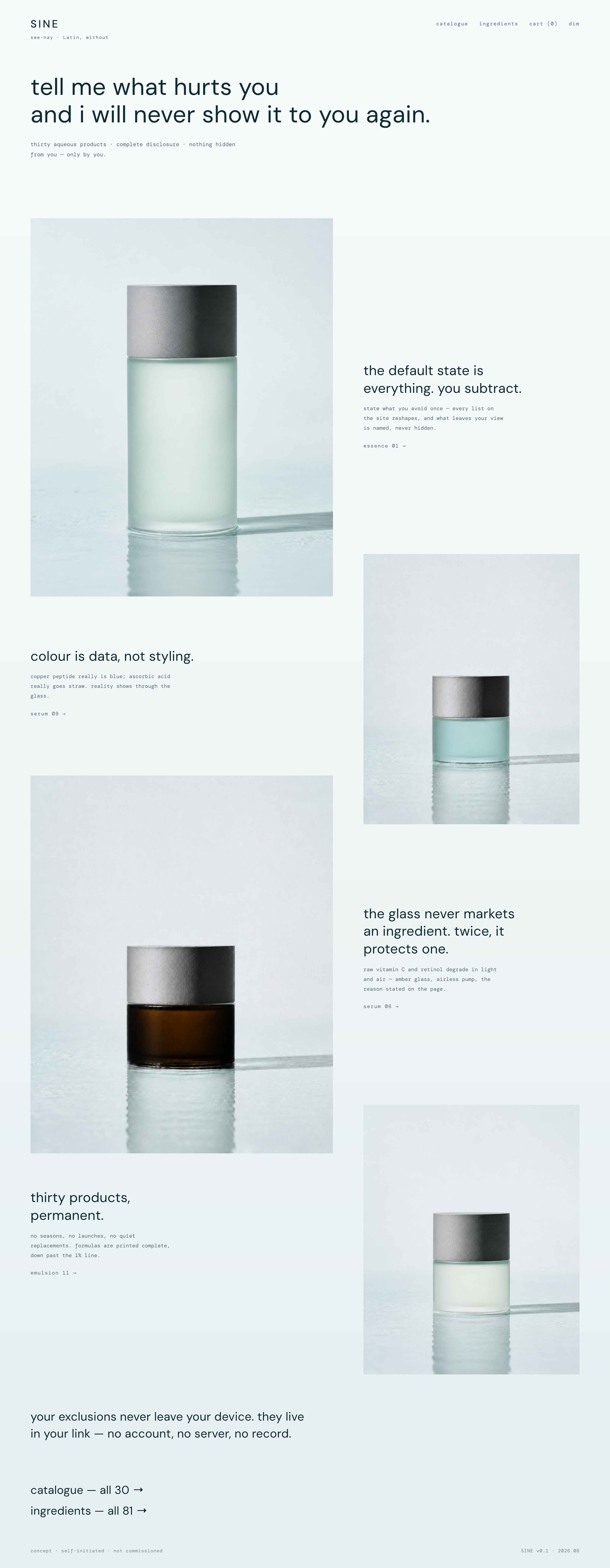
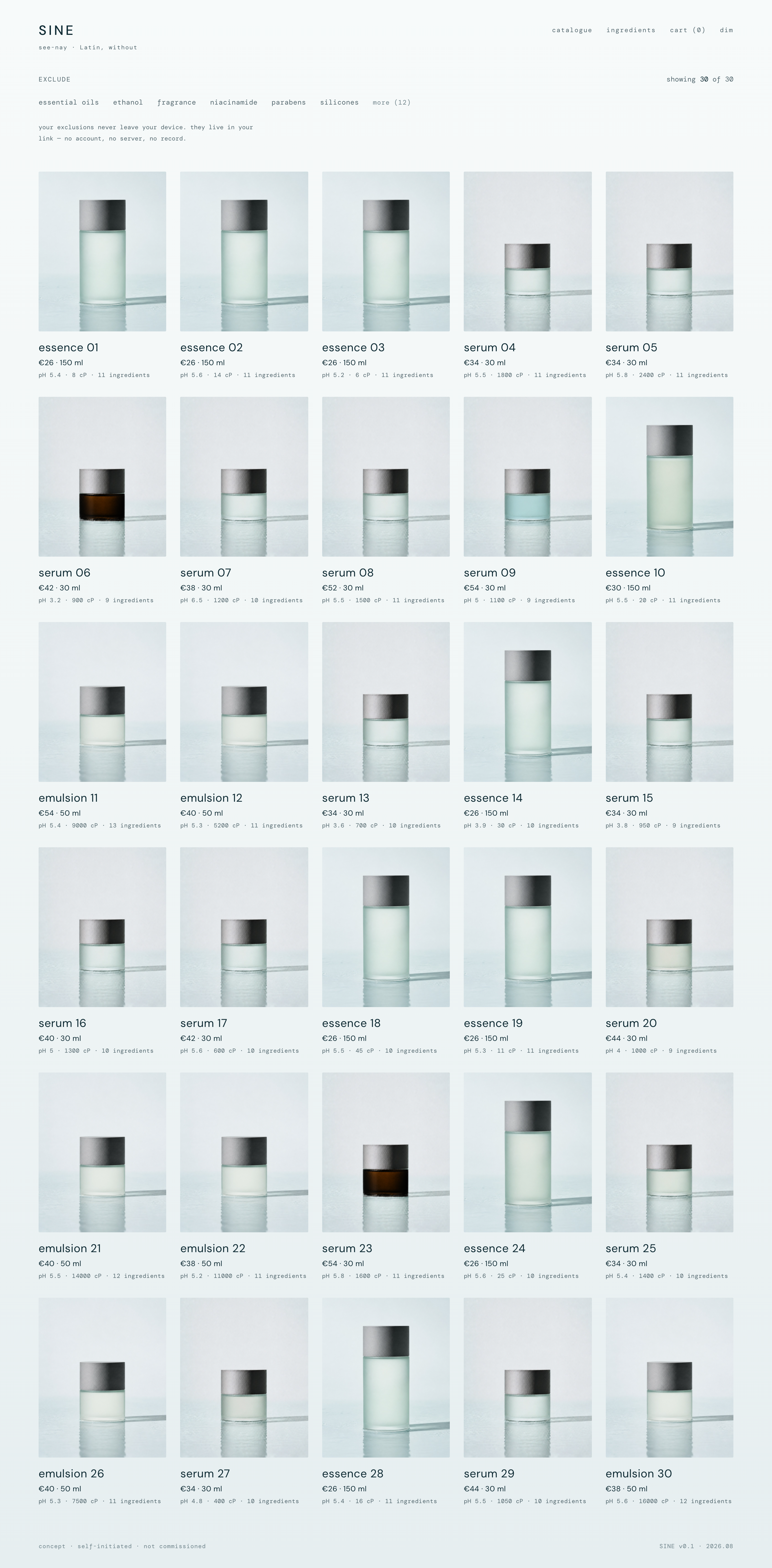
the range — shown in full. what a person excludes stays visible, its reason beside it.
the brand
name        SINE
range       30 invented products, permanent
type        aqueous — essences, serums, emulsions
position    complete ingredient lists, exclusion-first navigation
register    aqueous, serial, ingredient-led
the engine
default     everything · the user subtracts
map         18 exclusion groups · 81 ingredients
profile     browser storage and URL fragment · no account
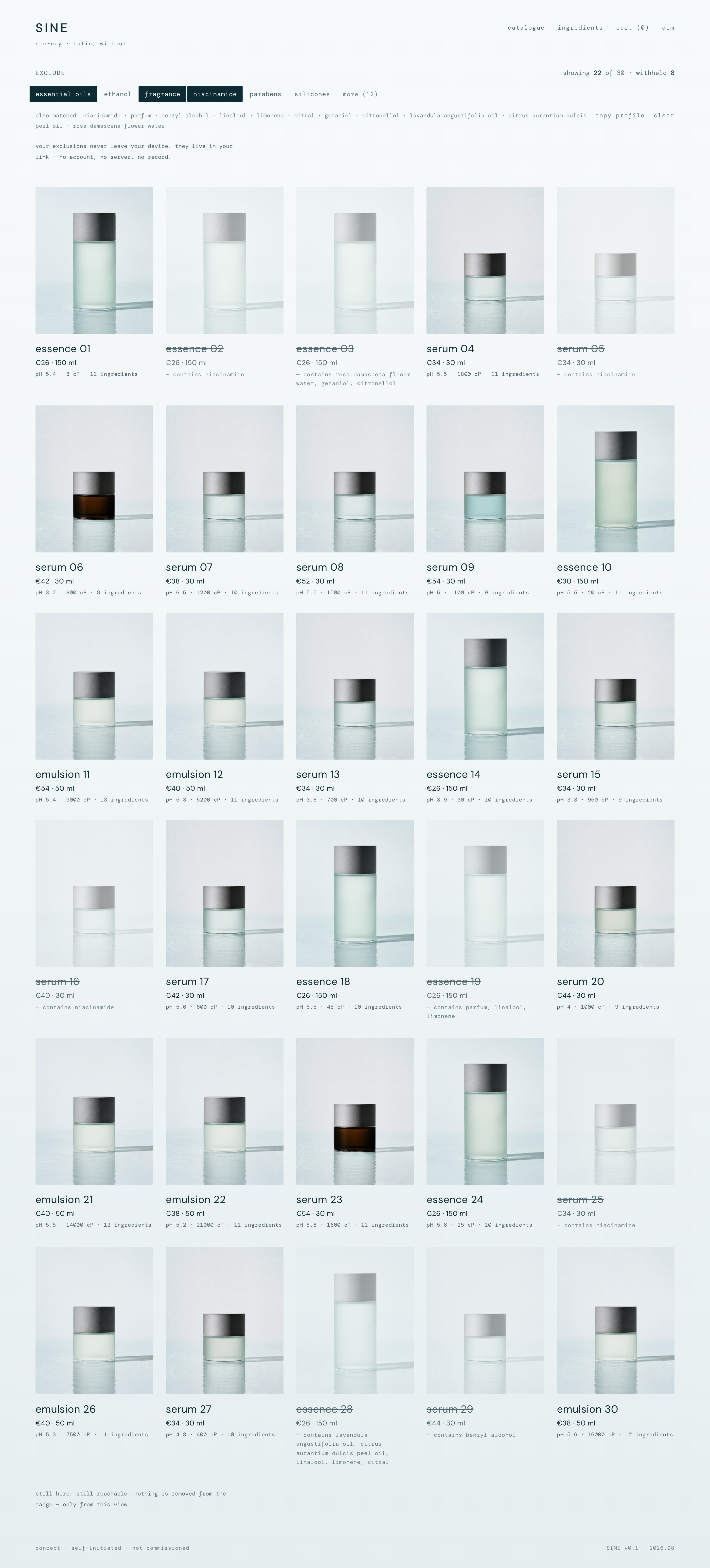
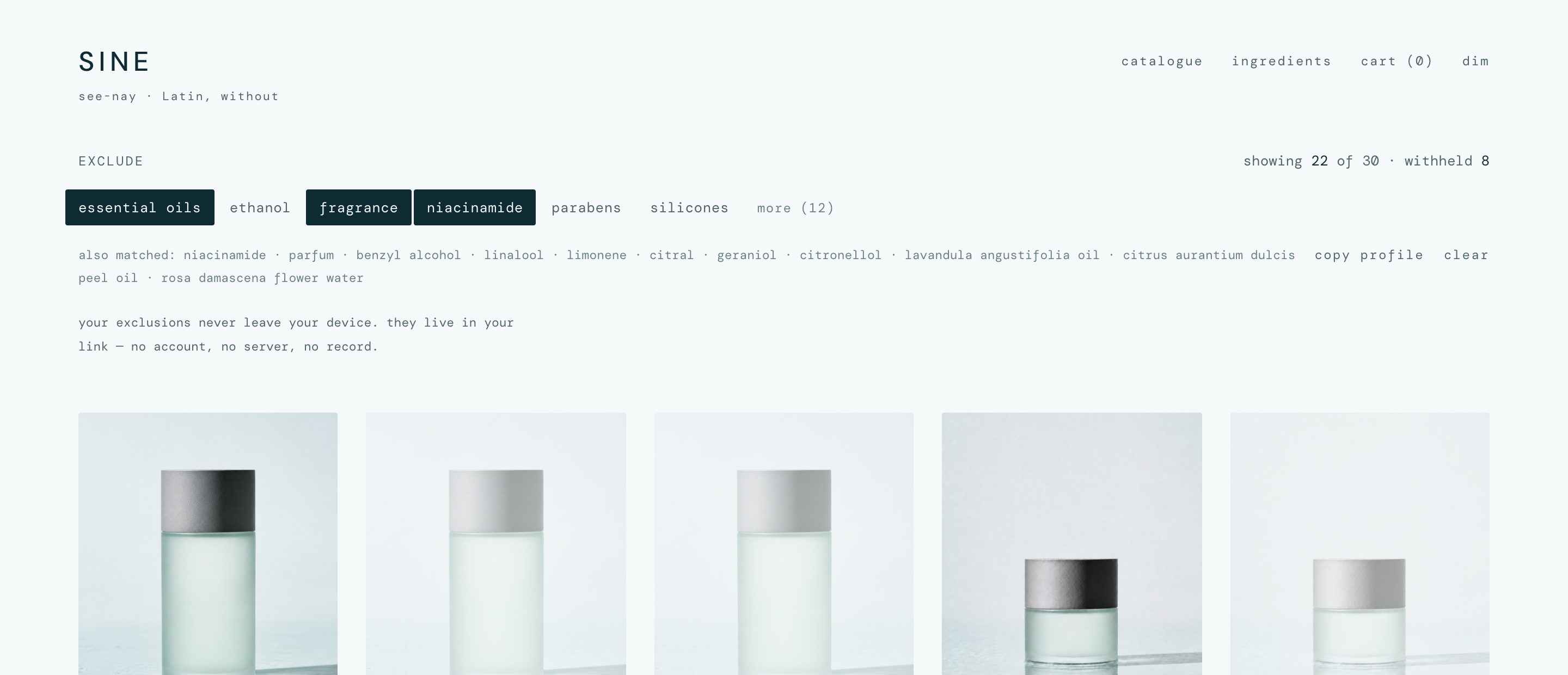
withheld    struck in place, matching ingredient named
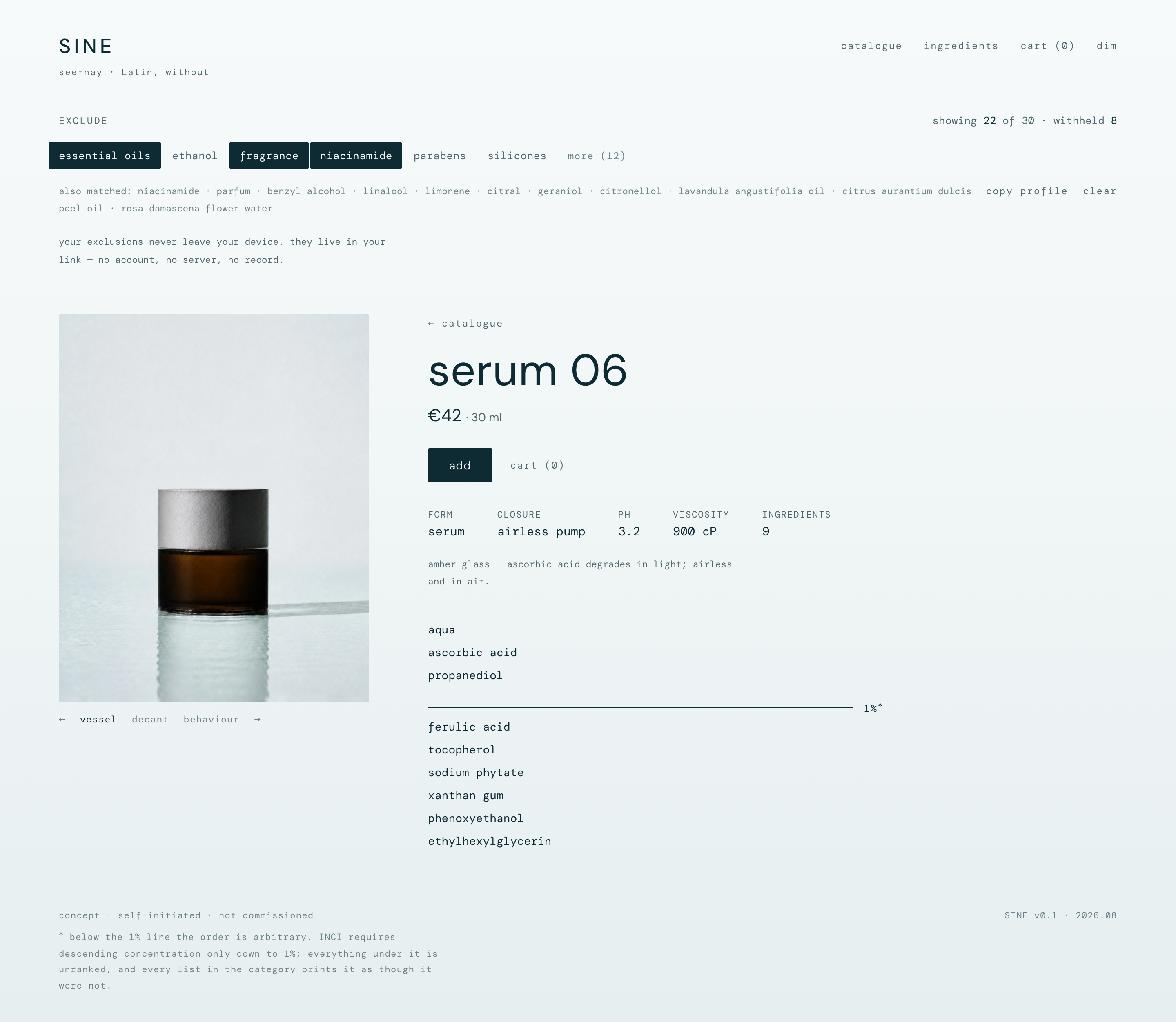
the line    a 1% marker computed from the study's formulations
vessels     4 base photographs → 30 derived product images
surface 03a — the catalog
01 · the constraint
someone arrives holding a word: an ingredient they have learned to avoid.
the label may know it by another. a similar-looking word may also refer to a different ingredient. the map has to account for both.
in study, the ethanol exclusion leaves cetearyl alcohol unmatched. a shared word is not enough.
ingredient order carries another limit. EU labeling rules allow ingredients below 1% to appear in any order after the higher-concentration ingredients. the printed sequence alone cannot show where that lower-concentration portion begins.
02 · the structural decision
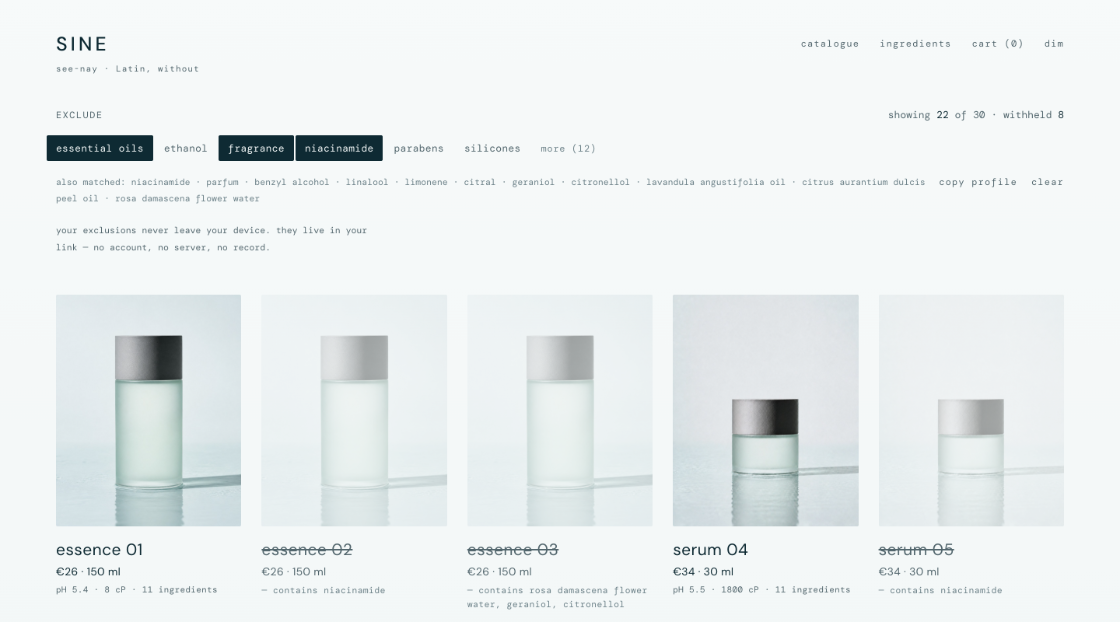
default state: everything. the user subtracts.
exclusion is the primary navigation. six groups visible, twelve through one reveal. the control stays available across the shop.
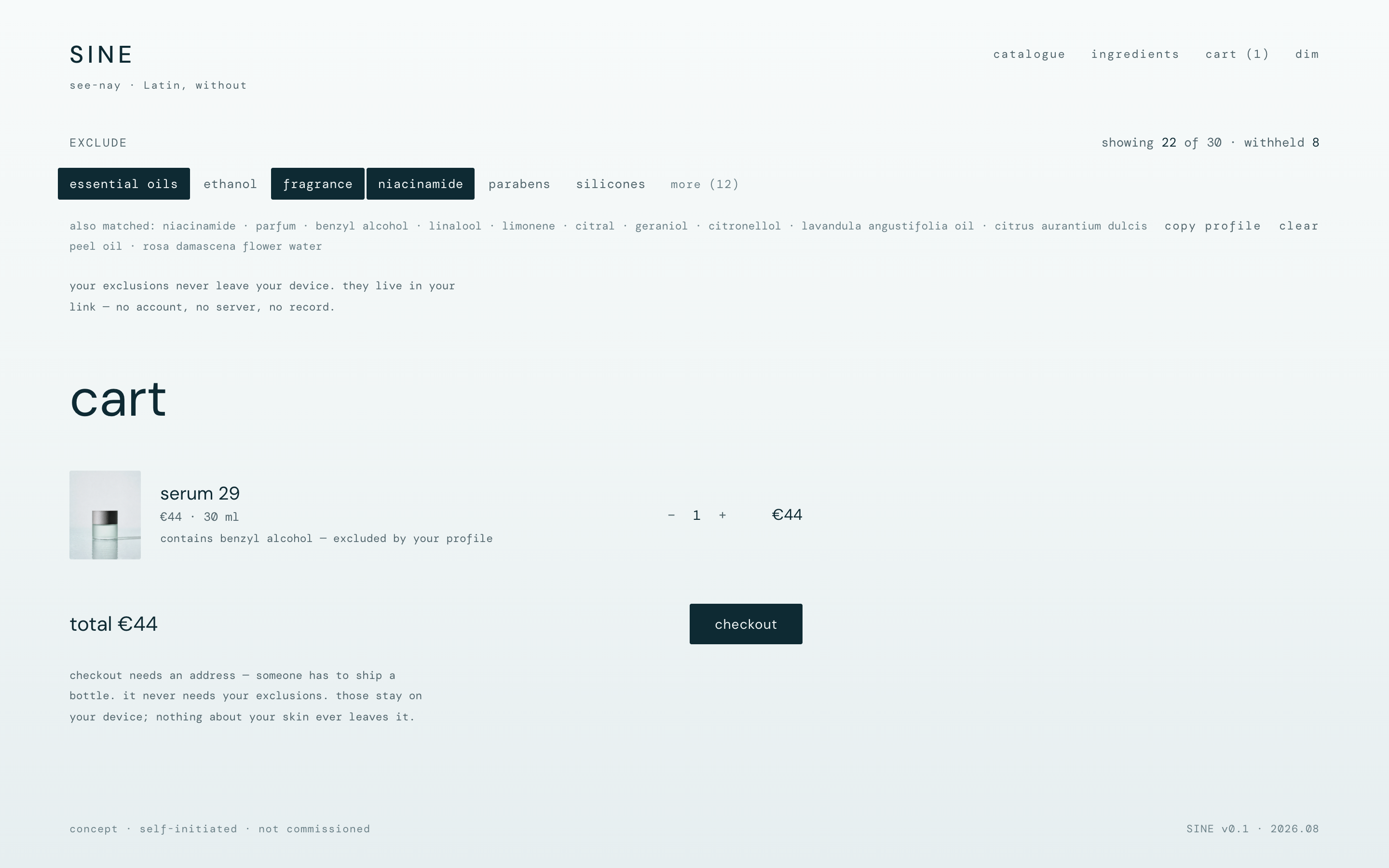
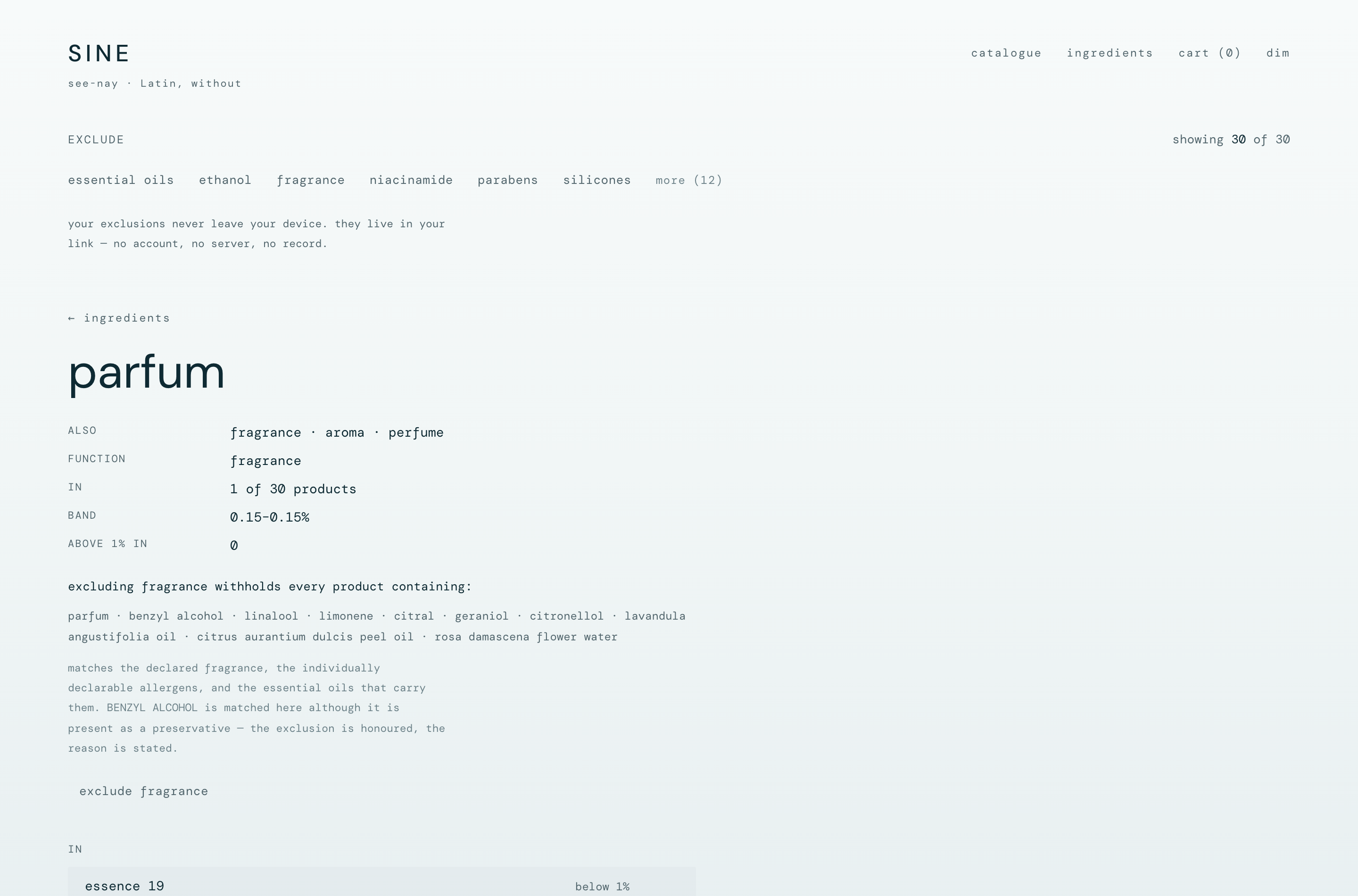
each group declares its matches and deliberate non-matches. in serum 29, benzyl alcohol is entered as a preservative and also belongs to the fragrance exclusion group. the catalog names the ingredient that triggered the match.
excluded products keep their place: struck, dimmed, the reason beside them.
a visible trace of the exclusion. the range has not disappeared.
on the product page, a line at 1% is computed from the invented formulation. its position comes from concentration data absent from the printed ingredient list.
four base photographs, thirty product images. contents are rendered from formulation data: color and opacity interpreted, no manufactured liquids measured. two products use amber vessels and airless pumps as part of the proposed protection strategy.
an exclusion may carry a history the shop does not need to know.
the profile stays in browser storage, mirrored after the # in the URL. that fragment is omitted from the browser's request for the page. sine's current implementation does not transmit the profile to a server or attach it to an account. sharing the complete link shares the profile with its recipient.
an excluded product can still be selected. its reason remains on the product page and in the cart; adding it uses the same action as any other product.
the reason — held in view. the exception remains the visitor's to make.
03 · what it rejects
essence 01, serum 06. form and serial leave room for the ingredient list, including the ingredient a visitor may refuse.
the study does not designate a universally safe range. the map names its matches; the choice remains with the visitor.
no account, consultation quiz, or recommendation profile. the exclusions change the local view of the catalog. they are not collected into customer segments.
product descriptions stay with specifications and ingredient lists. no wellness claims, ratings, or before-and-after comparisons.
04 · evidence

05 · what it cost
form and serial offer little guidance to someone arriving without an ingredient in mind. the range asks to be read through its lists and functions.
the local profile also stays outside the brand's proposed customer record. in this implementation, it cannot support server-side segmentation.
amber costs visibility. for serum 06, the liquid reappears in the decant image.
vessel and contents — shown apart.
surface 03b — the index
01 · the constraint
the word someone arrives with may name an ingredient. it needs an address within the shop.
02 · the structural decision
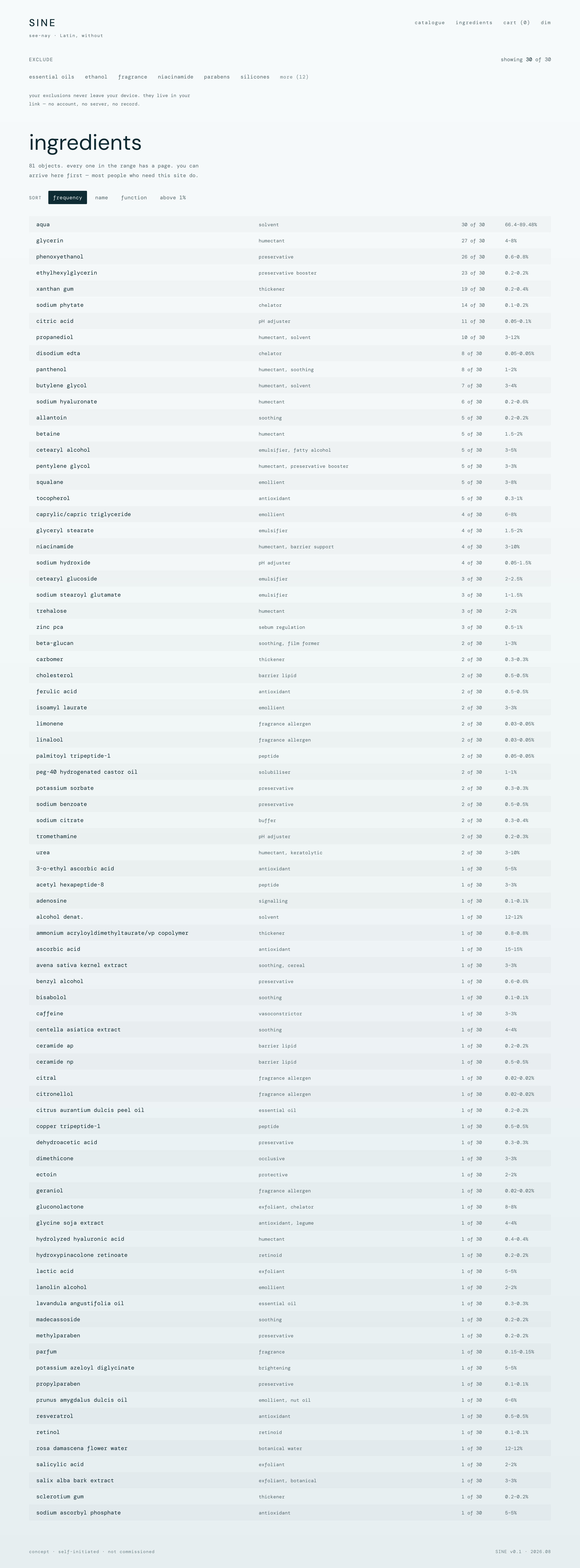
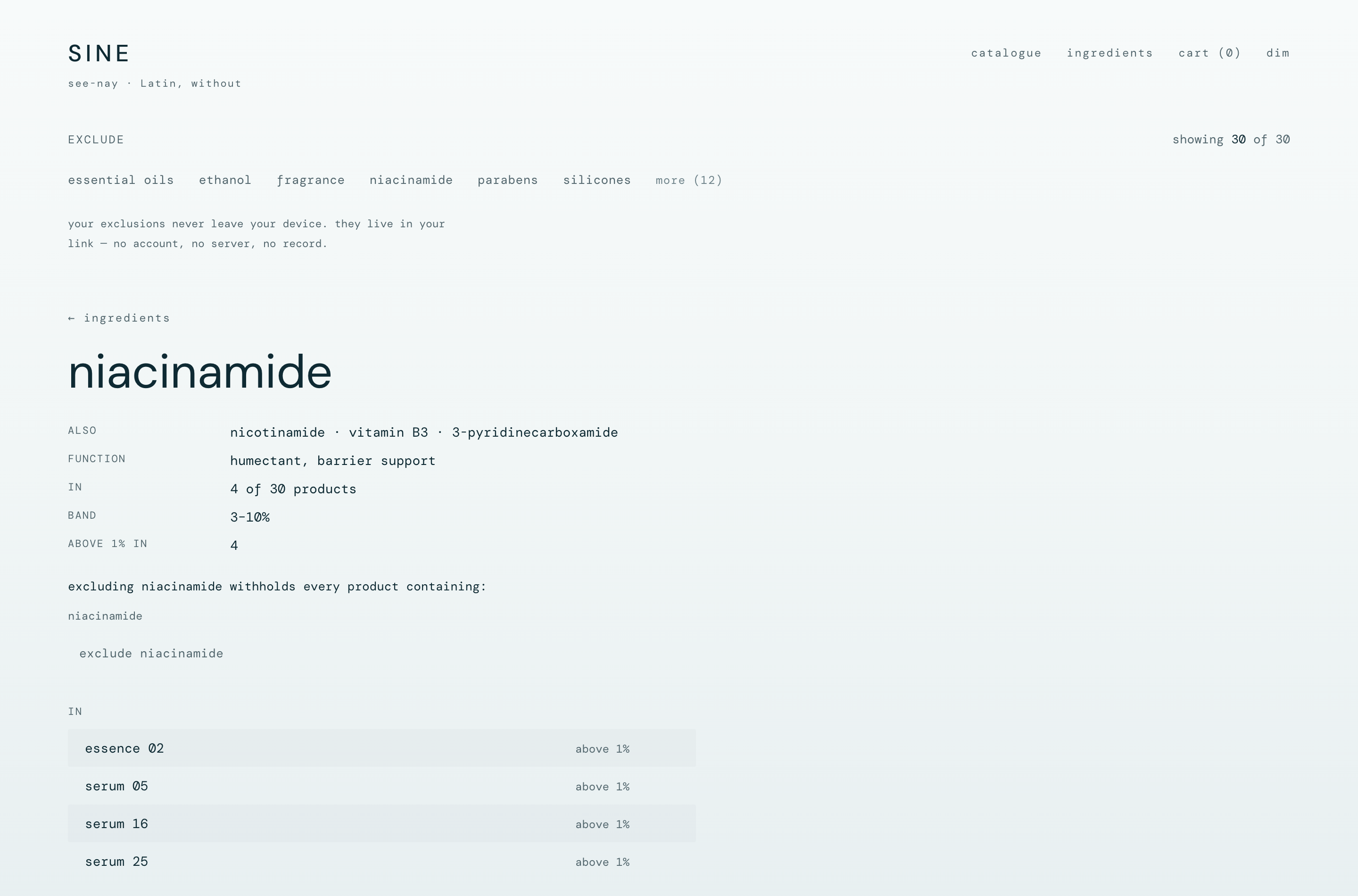
eighty-one ingredients, each with a page: function, concentration band within the range, listed synonyms, and the products in which it occurs.
products and ingredients can both be points of entry. the index can be ordered by name, frequency, function, or occurrence above 1%. an exclusion can be made from the ingredient page itself.
the shop can begin at the word.
the index connects two proposed approaches to vitamin C stability: derivatives in clear vessels, raw L-ascorbic acid in amber. these are formulation and packaging choices within the study. no stability-test results are claimed.
03 · what it rejects
the ingredient page belongs to the navigation. its matches are available without a product recommendation or consultation on the way in.
04 · evidence
05 · what it cost
the map would need continuing review: ingredient names, group membership, labeling requirements. a missed relationship could leave an exclusion looking more complete than it is.
someone may check one word and leave. the index is also for that visit.
disclosure
brand, products, formulations —— invented. the interface is functional; checkout does not place an order.
ingredient naming and labeling conventions inform the study. the map demonstrates an information-design problem. it does not establish that a product is safe for a particular person and is not medical guidance.