01 · selected work
tare
premise
tare begins with the space inside. material gives it a boundary.
what a container holds is never described. that is the owner's business.
system
footprint    180 × 180 mm, invariant
heights      060 · 120 · 180 · 240 · 300 · 360 mm
materials    anodised aluminium · galvanised steel · birch plywood
             cast acrylic · brass · raw concrete
matrix       36 cells
type         one mono, one grotesk for numerals
price        published as a formula
surface 01a — the catalog
01 · the constraint
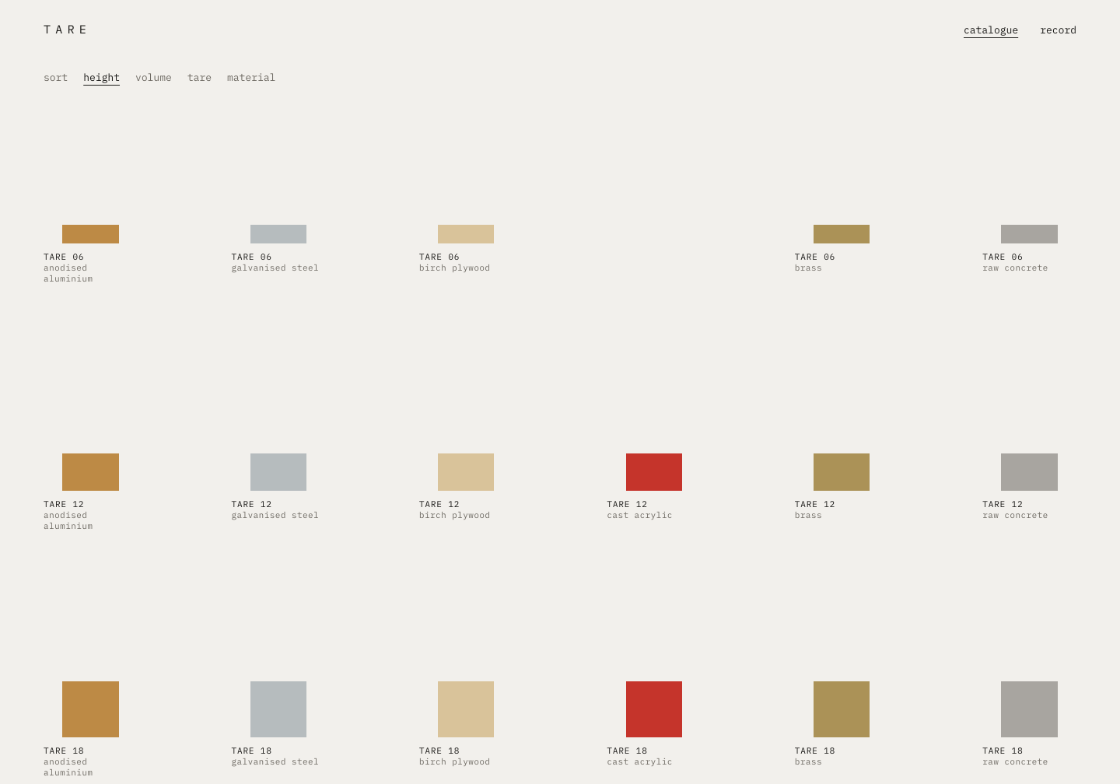
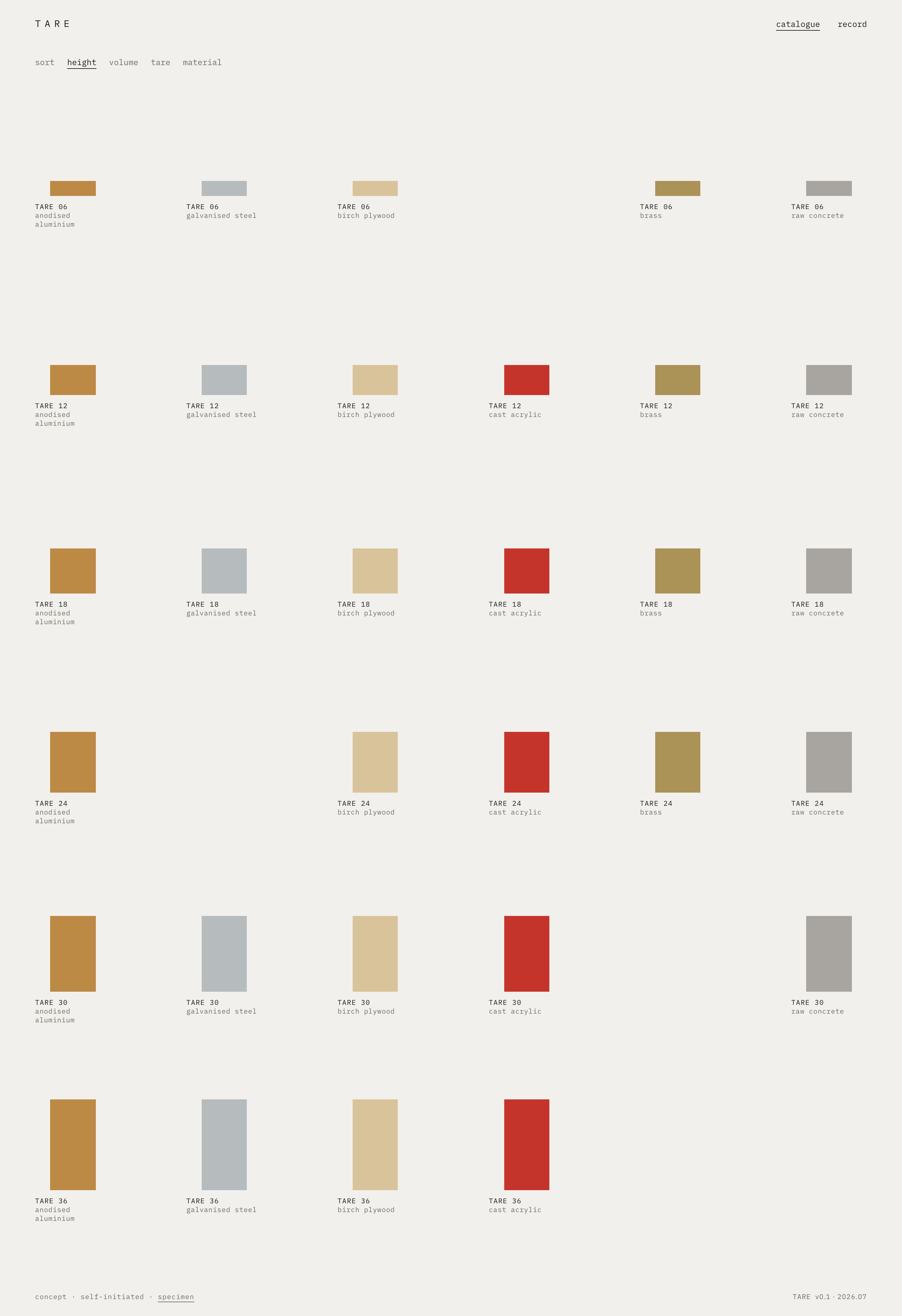
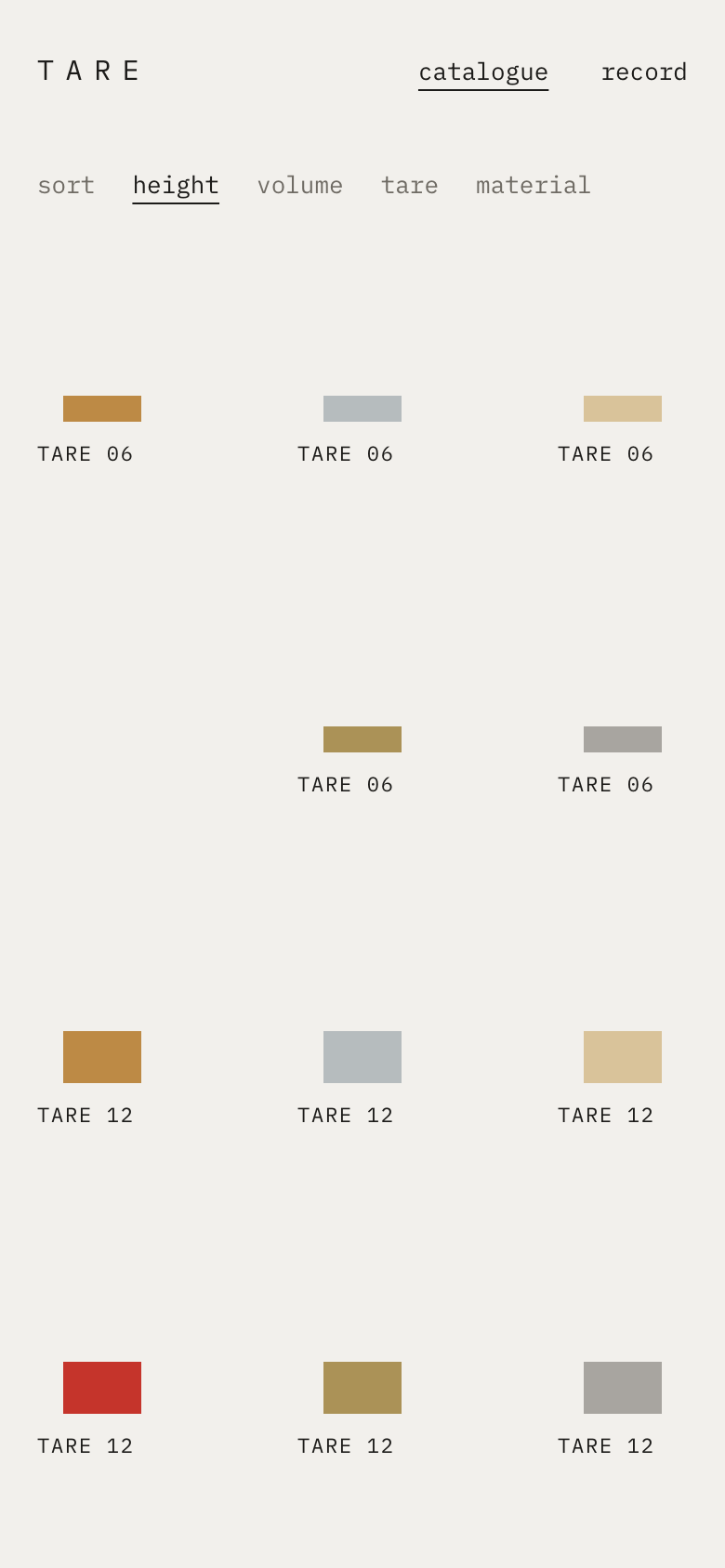
one footprint, six heights, six materials. thirty-six objects — each a different way of enclosing space.
the range — held fixed. no seasons. no featured piece.
in study, availability varies with fabrication lead times. an unavailable object keeps its position.
the view — held still by the proposed photographic rig: one camera position, one lighting setup, a seamless ground. within it, scale and material would change.
the prototype uses measured elevations: one projection, flat color, dimensions held to scale. no product photographs yet.
02 · the structural decision
cell size equals the gap between cells. the interval has a measure of its own.
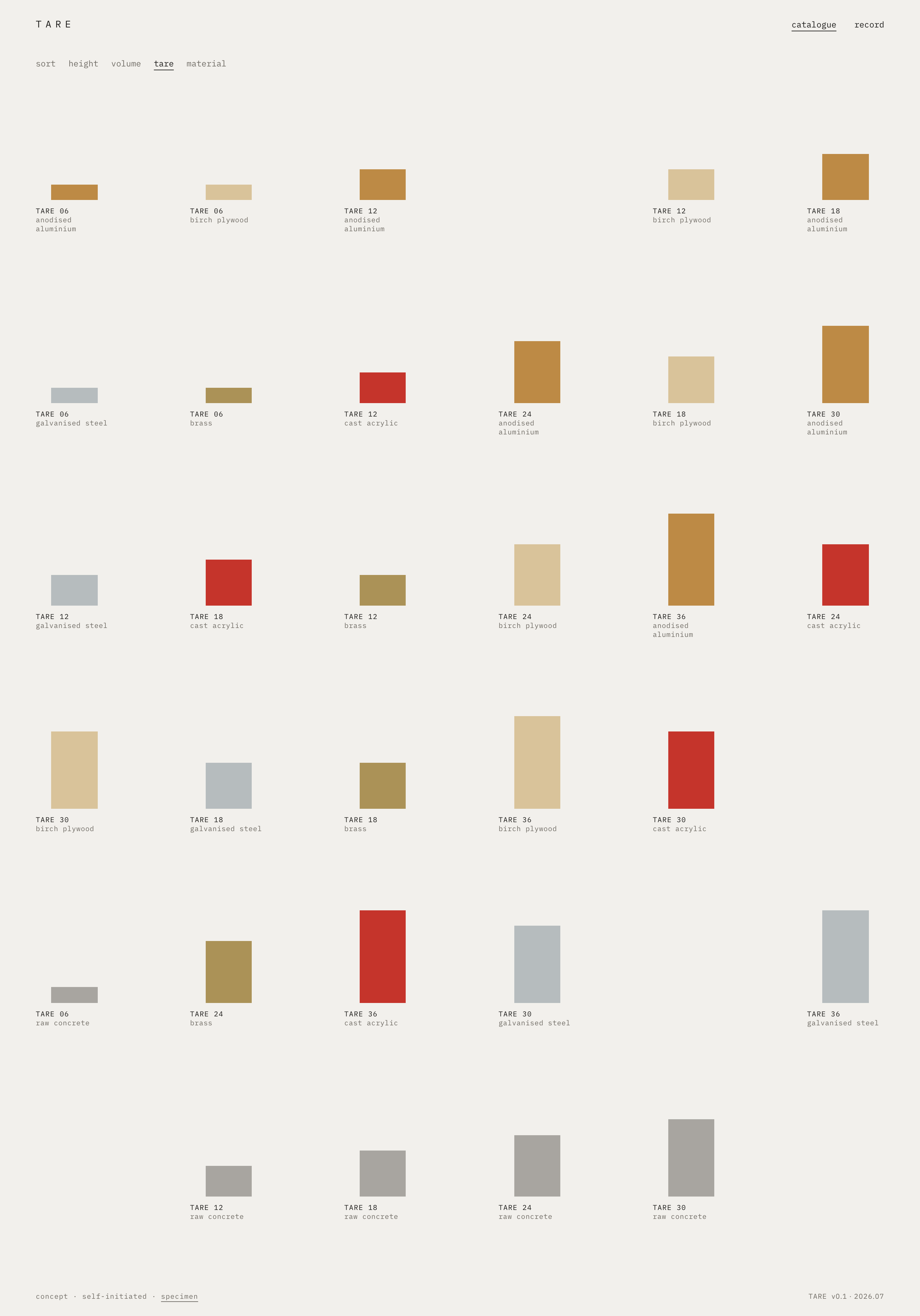
height, interior volume, tare weight, material: four ways to order the matrix. each describes a property of the objects. no cell is promoted above the others.
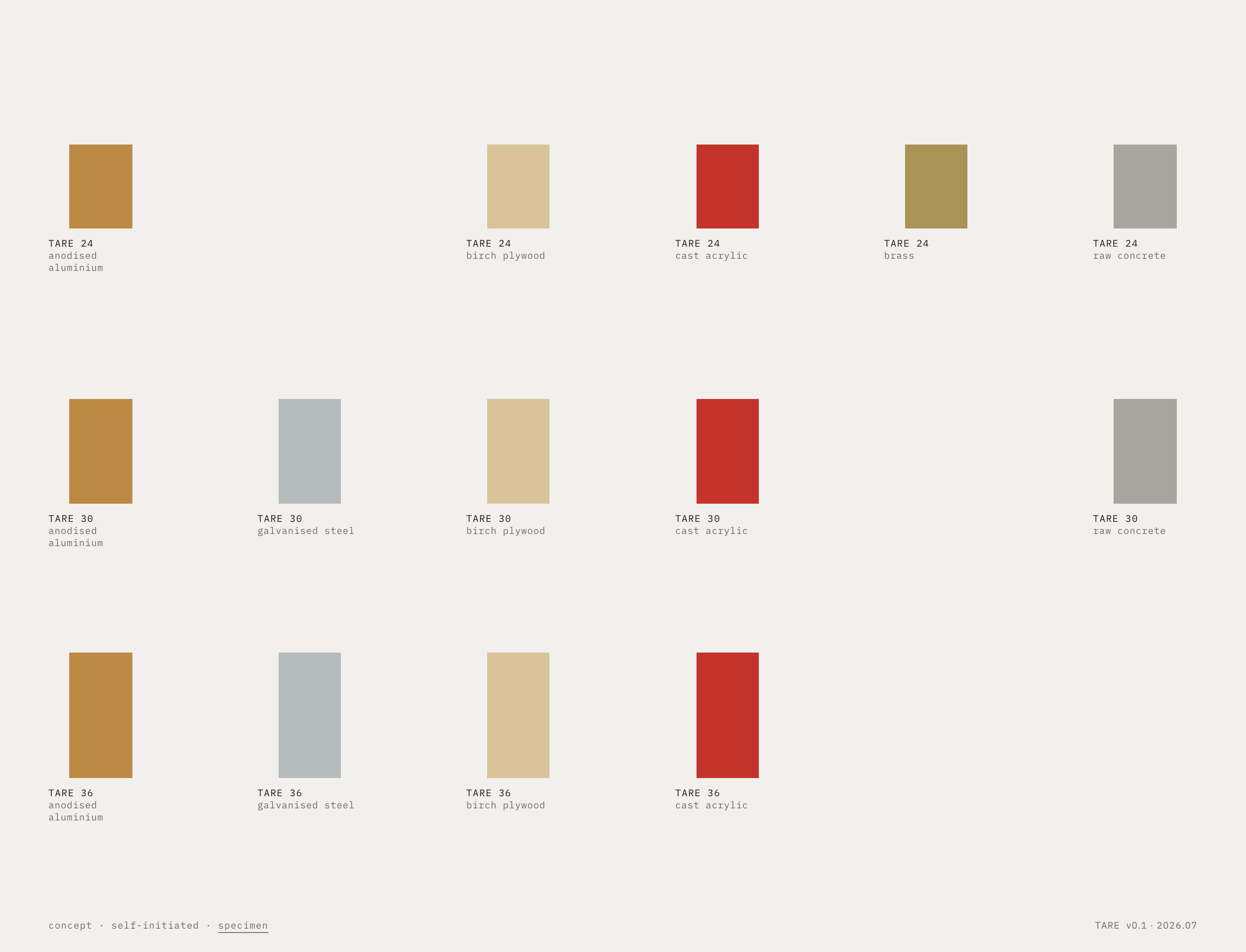
unavailable cells appear as absences. the grid keeps a place for what cannot be made yet.
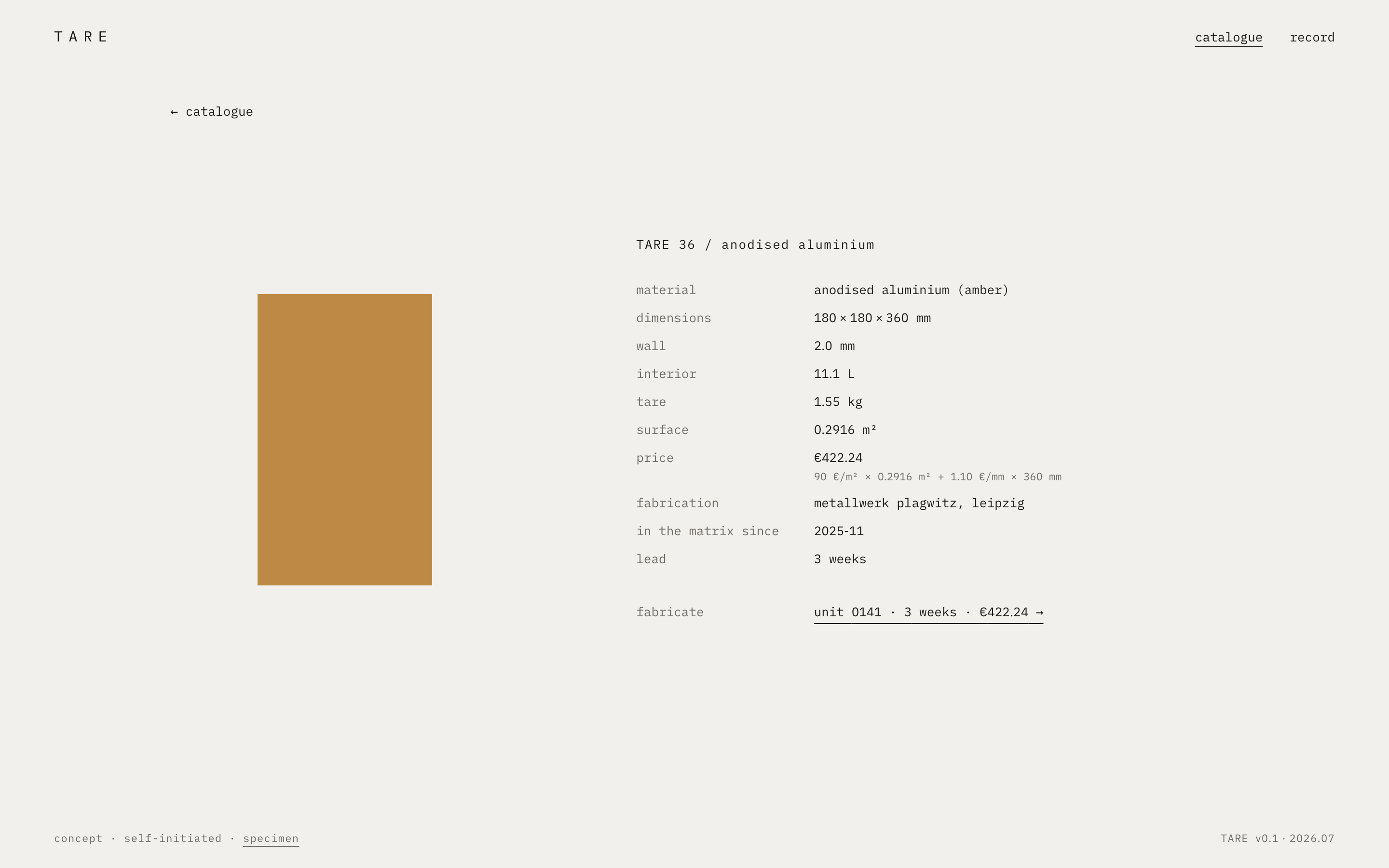
the object page — a specification: material, dimensions, interior volume, tare weight, fabricator, date. price follows a published formula.
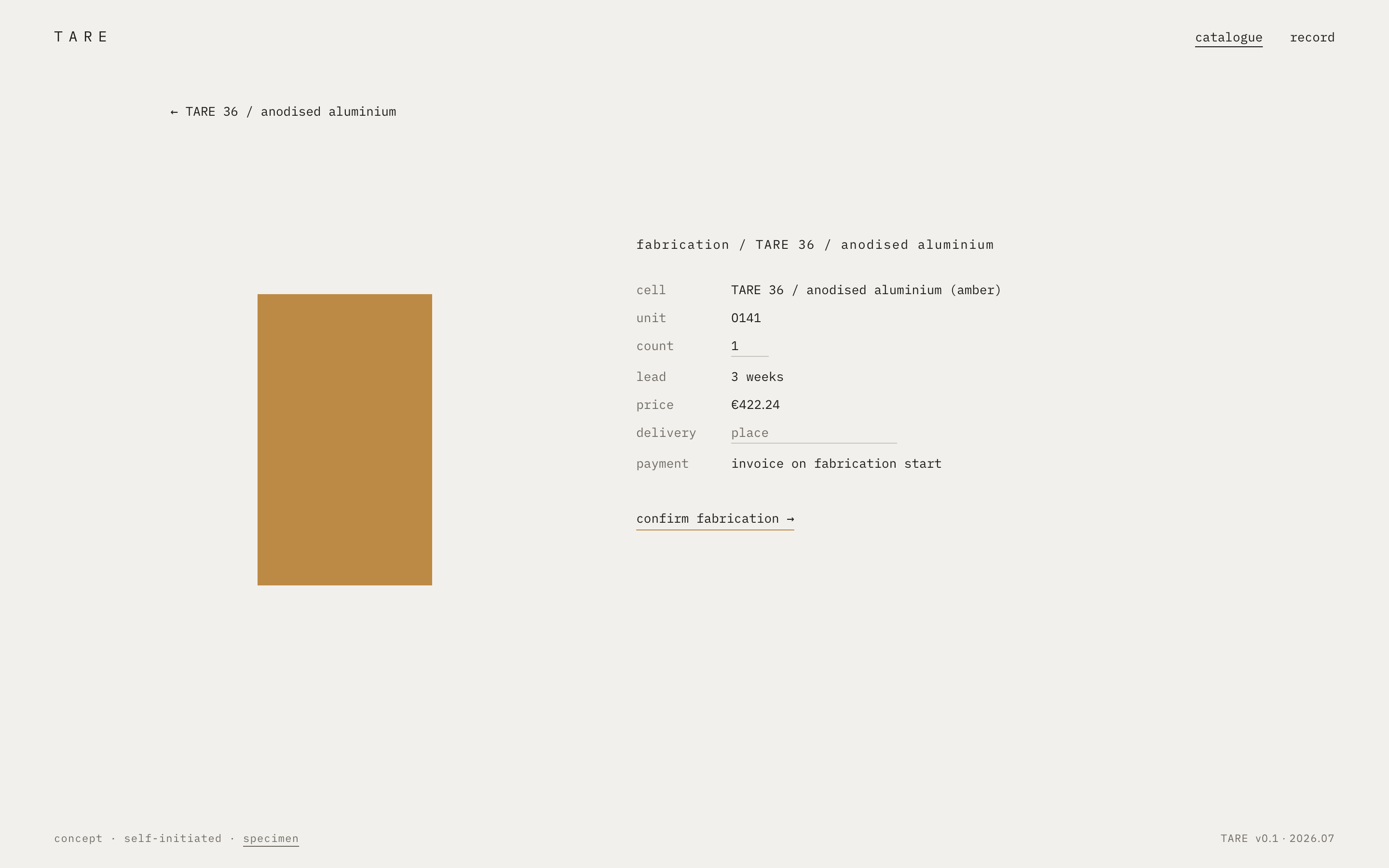
fabrication begins with a spec row:
fabricate → unit 0141 · 3 weeks · €282.47
a serial, assigned before commitment. a run takes consecutive numbers.
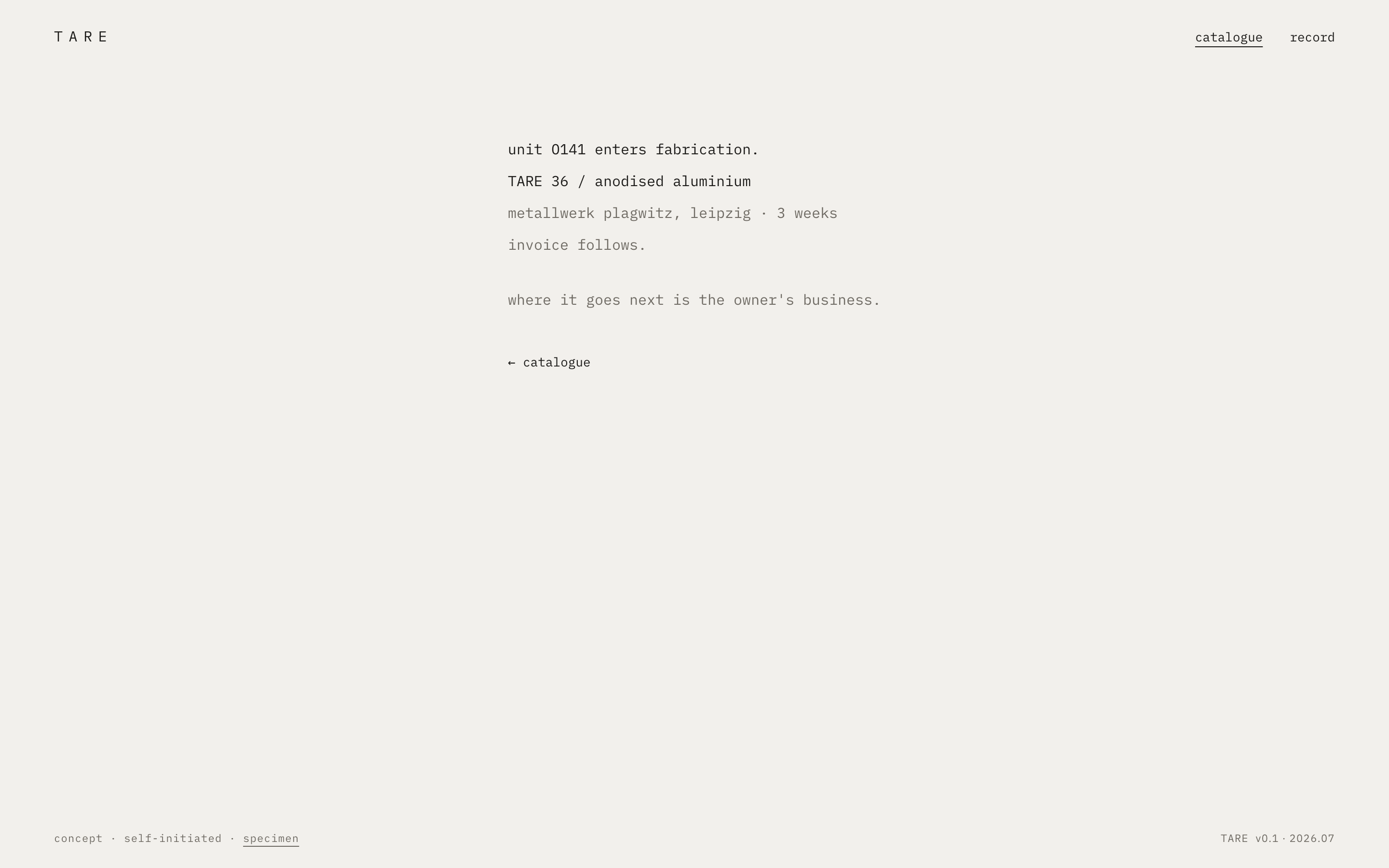
payment is proposed by invoice. the same serial later identifies the unit in the placement record.
03 · what it rejects
one specification begins an order. multiple units form a run; a different specification begins another order. there is no shared cart.
no hero product, seasonal edit, relevance ranking, or lifestyle image. each would introduce another order into the catalog, beyond the properties of the objects.
shop and archive occupy the same surface. nothing leaves the range to become its history.
04 · evidence
05 · what it cost
thirty-six possibilities. no preferred beginning.
choosing means finding a relation among volume, material, weight, and price. the published formula leaves those relations available for comparison, including cells that are temporarily unavailable.
the decision remains with the person looking.
no purchasing data yet. the cost of that choice is unmeasured.
surface 01b — the placement record
01 · the constraint
the specification ends before the object has a place to live.
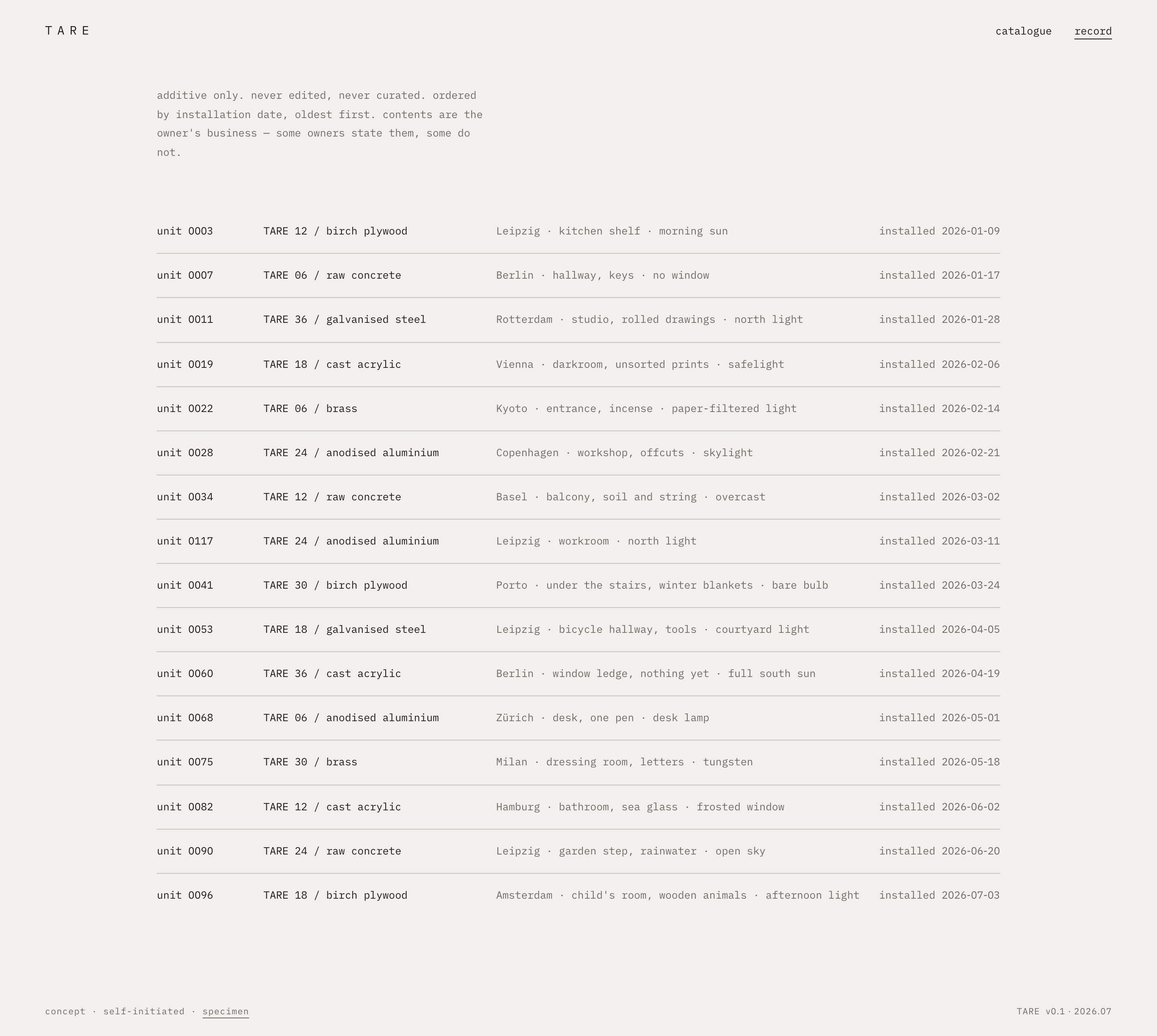
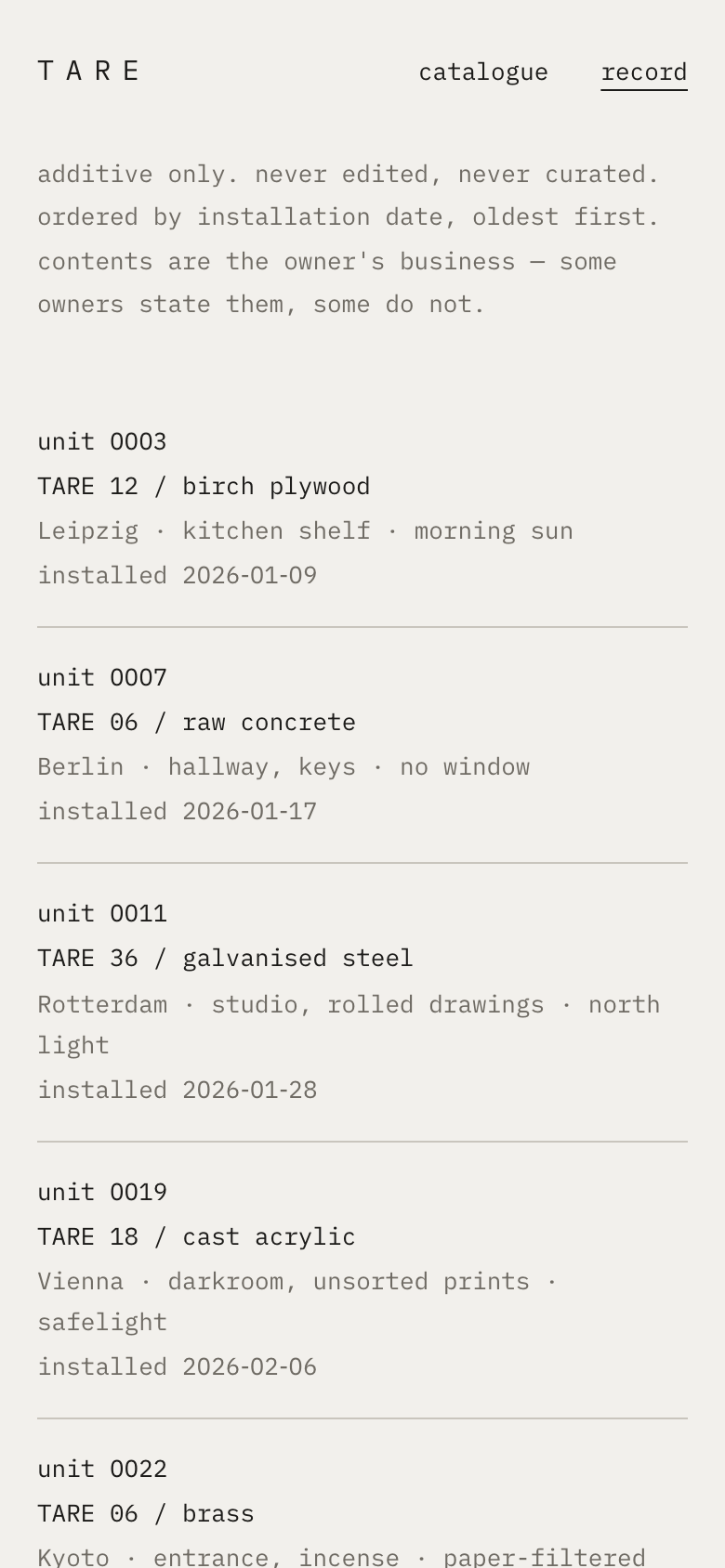
the placement record begins there: a serial, a date, a room, the light in that room.
the same number follows the unit from fabrication into use. entries follow installation date, oldest first. the record is conceived as additive: earlier entries remain as later ones arrive.
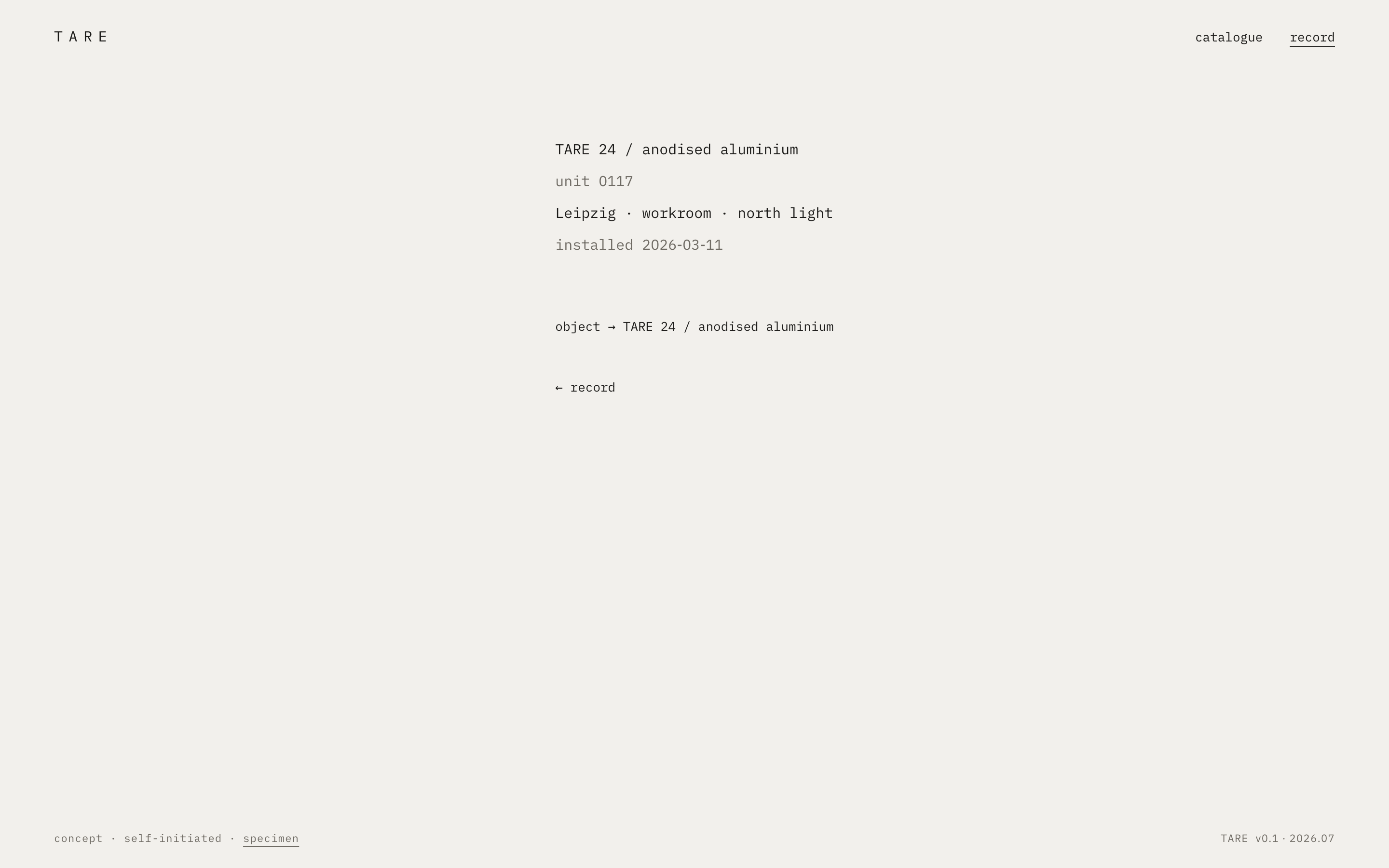
in the prototype — illustrative entries:
TARE 24 / anodised aluminium
unit 0117
Leipzig · workroom · north light
installed 2026-03-11
02 · the structural decision
the catalog's fixed view would give way to photographs made by owners. the camera would enter the rooms where the objects have come to rest.
type, grid, interval, palette —— held. the room supplies the variation:
an uneven exposure, light from another direction, something left beside the object.
the record is the same container, filling.
03 · what it rejects
photographs would remain in installation order. no testimonials, ratings, or styling commissioned by the brand.
04 · evidence
05 · what it cost
the catalog holds a view still. an owner's photograph would loosen that control: dim, crowded, taken without moving anything out of the way.
those conditions would remain in the image. some of what the object has entered, still around it.
this part remains prospective. no owners yet.
the prototype record contains text. no invented owner photographs.